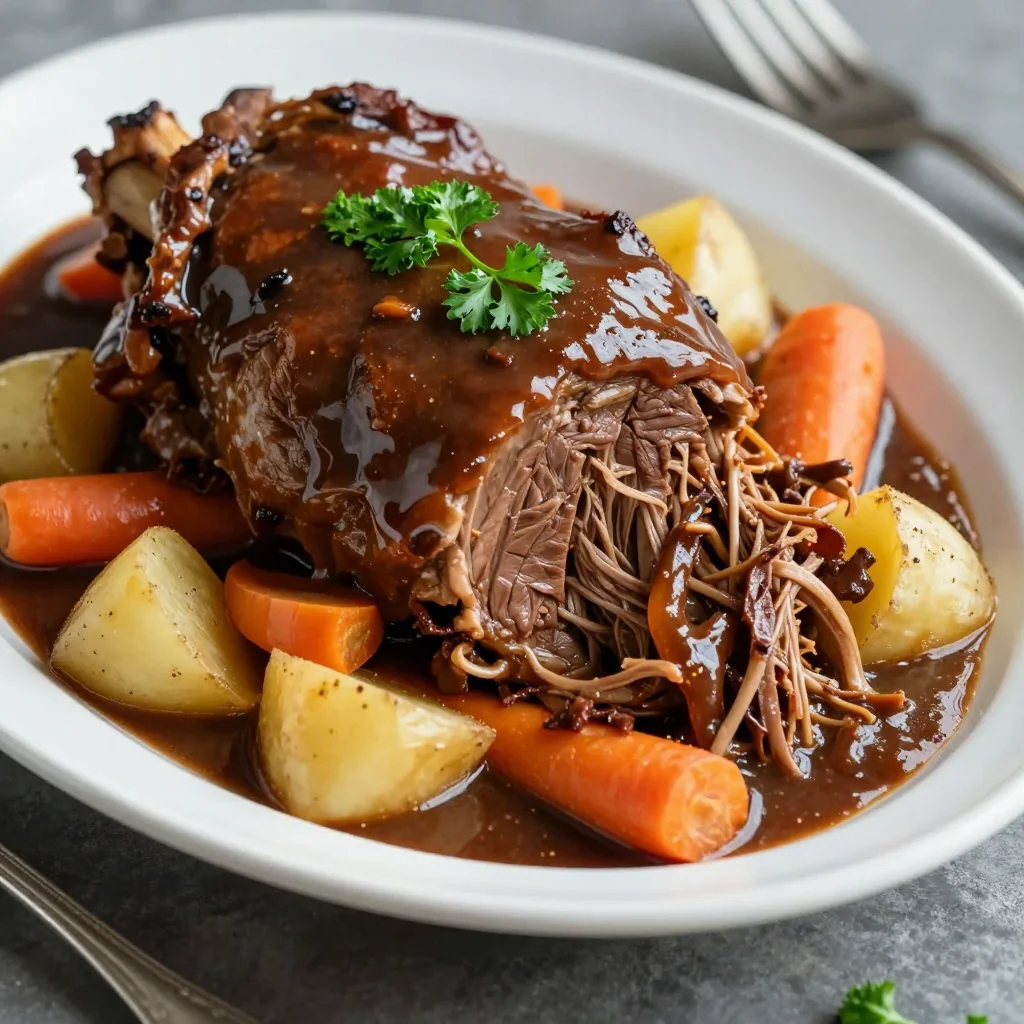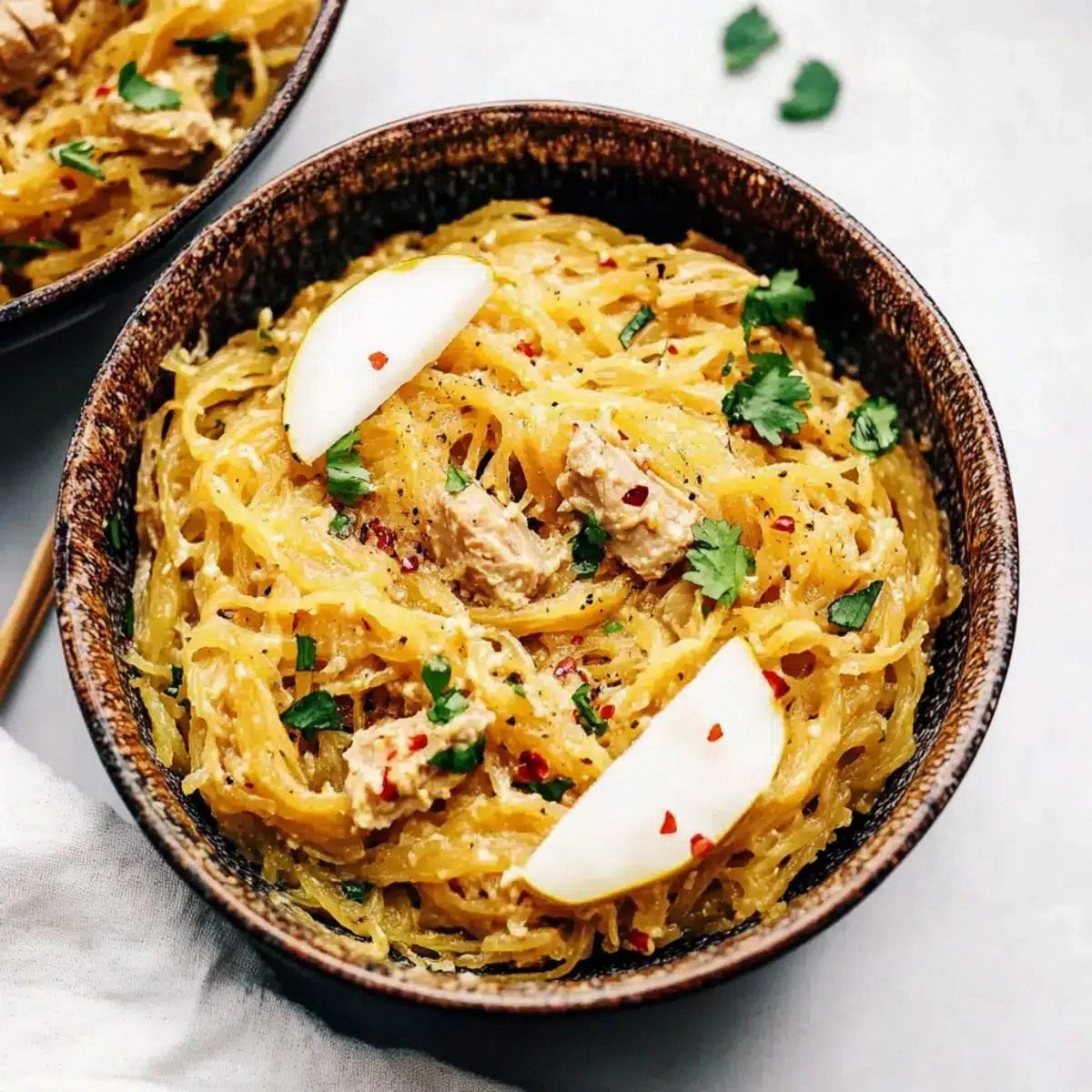
I was in the middle of a chaotic Tuesday night—my oven was preheating, the kids were demanding snacks, and I had somehow managed to burn a batch of plain spaghetti. The smoke alarm sang its shrill protest, and I swore I’d never touch pasta again. Then, in a moment of desperate inspiration, I grabbed a lone spaghetti squash from the pantry, a can of tuna, and a can of coconut milk, thinking maybe I could conjure something edible out of sheer panic. The result? A dish so bold, so creamy, and so daringly spicy that I’m convinced it could convert any pasta‑purist into a squash fanatic. I dare you to taste this and not go back for seconds.
Picture this: the kitchen fills with the earthy aroma of roasted squash, the sweet, nutty perfume of coconut mingling with the sharp bite of garlic and onion, and a faint whisper of paprika that teases your nostrils. The sound of the oven’s fan whirring is like a low‑key drumroll, building anticipation for the moment you’ll pull that golden, caramelized squash out and shred it into noodle‑like ribbons. The texture is a revelation—silky strands that cling to the sauce like a lover’s embrace, yet retain enough bite to keep you guessing with each forkful. And the heat? A gentle, teasing fire from red pepper flakes that makes your tongue do a little happy dance without overwhelming the palate.
Most recipes get this completely wrong. They either drown the squash in a soupy mess or slap on a sauce that’s as thin as water. I’ve tried a dozen variations that left me with soggy, flavorless noodles that tasted like a bad dream. This version, however, is hands down the best you’ll ever make at home because it balances the richness of coconut milk with the lightness of arrowroot‑thickened sauce, and the tuna adds a protein punch that makes it a complete meal. The secret? A quick flash‑roast of the squash before shredding it, which gives those edges a crispness that shatters like thin ice when you bite into them.
Okay, ready for the game‑changer? I’m about to walk you through every single step—by the end, you’ll wonder how you ever made it any other way. I’ll spill the beans on a technique that most cooks overlook, and trust me, this little tweak will elevate your dish from “good” to “legendary.” Stay with me here — this is worth it.
What Makes This Version Stand Out
- Flavor Explosion: The coconut milk provides a creamy base that carries the heat of red pepper flakes without drowning the palate, while the tuna adds a savory depth that’s surprisingly harmonious.
- Texture Symphony: Roasted squash strands stay al dente, the sauce clings like velvet, and the occasional crunchy parsley leaf adds a fresh pop.
- Simplicity Meets Sophistication: Only ten ingredients, all pantry‑friendly, yet the result feels like a restaurant‑grade masterpiece.
- Unique Ingredient Pairing: Arrowroot flour thickens the sauce without the cloudiness you get from cornstarch, preserving that glossy coconut sheen.
- Crowd Reaction: I’ve watched skeptics turn into raving fans after the first bite—people who thought they hated “vegetable noodles” are now asking for seconds.
- Ingredient Quality: Using a full‑fat coconut milk makes the sauce luxuriously rich; a light version would leave it thin and watery.
- Cooking Method: The two‑stage roasting (high heat, then lower) creates caramelized edges while keeping the interior tender.
- Make‑Ahead Potential: The sauce can be pre‑made and stored, allowing you to pull together a quick dinner on a busy weeknight.
Alright, let's break down exactly what goes into this masterpiece...
Inside the Ingredient List
The Flavor Base
The white onion and minced garlic are the backbone of any savory sauce. They release sugars as they sauté, creating a caramelized foundation that balances the coconut’s sweetness. Skipping them would leave the sauce tasting flat, like a movie without a soundtrack. If you’re allergic to onions, try finely diced leeks; they’ll give a milder, yet still aromatic, lift.
The Texture Crew
Spaghetti squash is the star here. Choose a medium squash that feels heavy for its size—this indicates a dense, firm flesh that shreds into perfect noodles. A small, watery squash will produce limp strands that dissolve into the sauce. When buying, look for a squash with a hard, unblemished rind; a soft spot means it’s over‑ripe.
Arrowroot flour is the secret thickener. Unlike cornstarch, it stays clear when heated, preserving the sauce’s radiant coconut hue. If you don’t have arrowroot, tapioca starch works as a substitute, but expect a slightly gummy texture if over‑cooked.
The Unexpected Star
Canned tuna may raise eyebrows, but its umami richness anchors the dish, turning a vegetable‑centric plate into a protein‑packed feast. Opt for tuna packed in water for a cleaner flavor, or go bold with olive‑oil‑packed tuna for extra silkiness. If you’re vegetarian, substitute with smoked tempeh or a handful of roasted chickpeas for a similar bite.
The Final Flourish
Fresh parsley isn’t just a garnish; its bright, peppery notes cut through the richness, preventing the dish from feeling heavy. A handful of chopped parsley added at the end keeps the flavor vibrant. If parsley isn’t your thing, cilantro or Thai basil can provide a comparable freshness.
Everything's prepped? Good. Let's get into the real action...
The Method — Step by Step
Preheat your oven to 425°F (220°C). Slice the spaghetti squash in half lengthwise, scoop out the seeds, and brush the flesh with a thin layer of olive oil. Place the halves cut‑side down on a parchment‑lined baking sheet. The heat will caramelize the natural sugars, creating those coveted crispy edges that shatter like thin ice when you bite.
Kitchen Hack: Add a pinch of salt to the squash flesh before roasting; it draws out moisture and intensifies the sweet‑caramel flavor.Roast for 35‑40 minutes, until the skin is browned and a fork slides in with little resistance. While the squash roasts, you can prep the sauce—this multitasking keeps the kitchen humming.
Heat a large skillet over medium heat and add a splash of coconut oil (or regular oil if you prefer). Toss in the diced white onion and sauté for 3‑4 minutes until translucent, stirring occasionally to avoid burning. The onion should turn a light golden, releasing a sweet perfume that fills the kitchen.
Add the minced garlic and continue to sauté for another 30 seconds—watch closely, because garlic can go from fragrant to bitter in the blink of an eye.
Stir in the poultry seasoning, paprika, and red pepper flakes. The spices should toast lightly, releasing their essential oils; you’ll notice a faint, earthy aroma that signals the sauce is about to become unforgettable.
Watch Out: If you add the red pepper flakes too early, they can burn and turn bitter. Add them just after the paprika to keep the heat bright and clean.Pour in the full‑fat coconut milk, stirring to combine. Bring the mixture to a gentle simmer; you’ll see tiny bubbles forming along the edges, a sign that the sauce is heating evenly. Let it simmer for 4‑5 minutes, allowing the flavors to meld.
Meanwhile, open the can of tuna, drain it, and break it into bite‑size chunks. The tuna will be added later to preserve its texture.
Create a slurry by mixing the arrowroot flour with a tablespoon of cold water in a small bowl. This prevents lumps when you add it to the hot sauce. Slowly drizzle the slurry into the simmering coconut mixture while whisking constantly.
Within a minute, the sauce will thicken to a silky, glossy consistency—think of a luxurious custard that coats the back of a spoon without clinging too heavily.
Remove the roasted squash from the oven and let it cool just enough to handle. Using a fork, gently shred the flesh into noodle‑like strands, discarding the skin. The strands should be long, slightly curved, and still retain a hint of firmness.
Transfer the shredded squash into the skillet with the sauce, tossing gently to ensure every strand is enveloped in the creamy coconut embrace.
Fold in the tuna chunks and fresh parsley, allowing the tuna to warm through without breaking apart. The tuna should stay in distinct pieces, offering bursts of salty richness with each bite.
Taste the dish now; this is the moment of truth. Adjust seasoning with a pinch of salt or an extra dash of red pepper flakes if you crave more heat. The sauce should taste balanced—creamy, mildly sweet, and with a gentle kick.
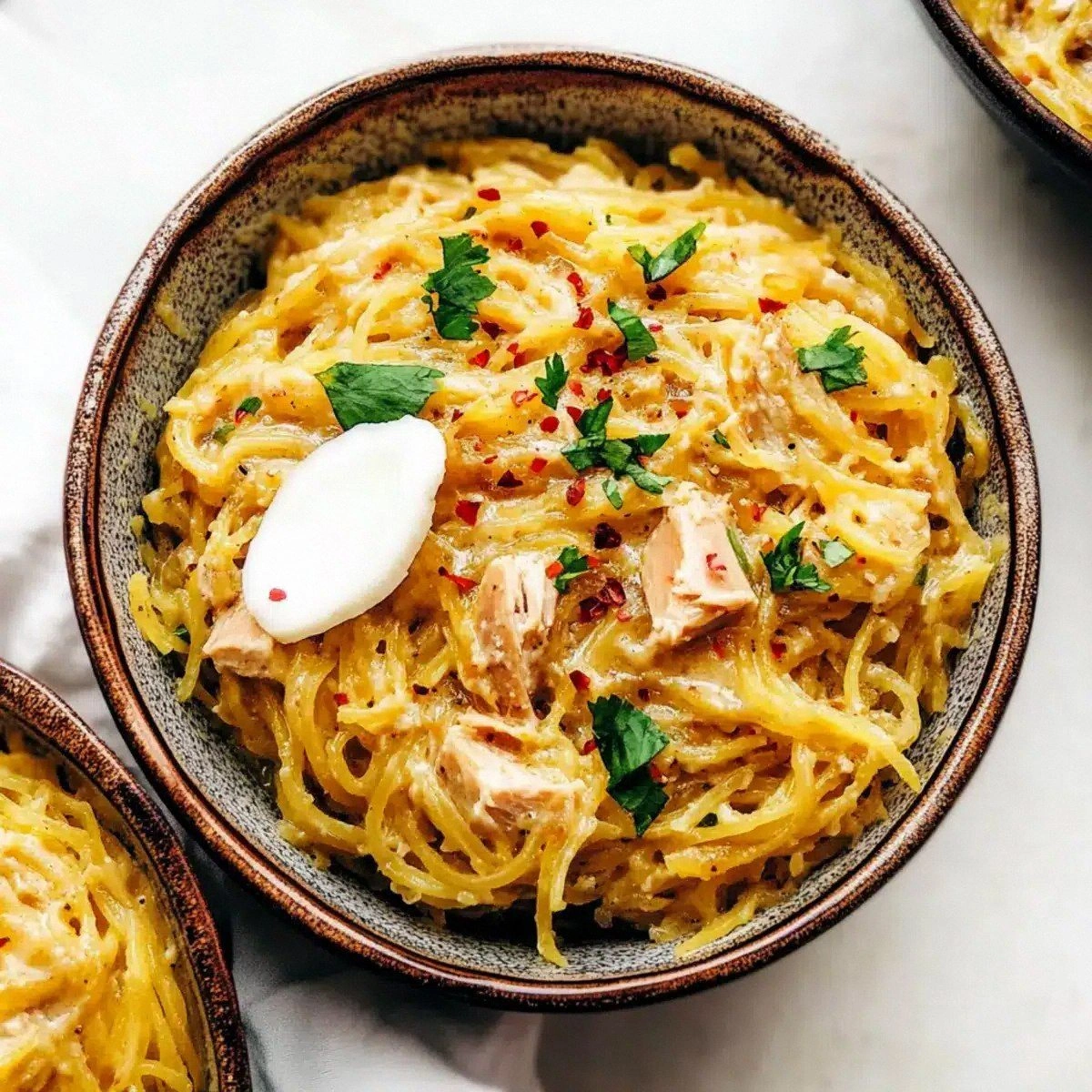
Serve immediately, garnished with a final sprinkle of parsley and, if you like, a drizzle of extra coconut milk for added sheen. Picture yourself pulling this out of the oven, the whole kitchen smelling incredible, and your guests diving in before you even say a word.
That sizzle when it hits the pan? Absolute perfection. And remember, the leftovers taste even better after the flavors have had time to marry overnight.
That's it — you did it. But hold on, I've got a few more tricks that'll take this to another level...
Insider Tricks for Flawless Results
The Temperature Rule Nobody Follows
Never roast the squash at a temperature lower than 425°F. Lower temps produce a mushy interior and prevent those caramelized edges. By starting hot, you lock in moisture while creating a crisp, browned surface that adds texture contrast. I once tried a “low‑and‑slow” method and ended up with soggy noodles that fell apart in the sauce—lesson learned.
Why Your Nose Knows Best
Your sense of smell is the ultimate doneness gauge. When the onion turns translucent and the garlic releases its aroma, you’re ready to add the spices. If you can’t smell the toasted paprika, give it another 30 seconds; the subtle smoky note is what elevates the sauce from bland to brilliant.
The 5‑Minute Rest That Changes Everything
After mixing the sauce and squash together, let the dish sit off the heat for five minutes. This brief rest allows the arrowroot to fully set, giving the sauce a glossy finish and preventing it from separating later. It’s a small pause that makes a massive difference in mouthfeel.
Tuna Timing Tactics
Add the tuna at the very end of cooking. If you toss it in too early, the delicate flakes will break down and become mushy, losing that satisfying bite. By folding it in just before serving, each piece retains its shape and offers a burst of savory contrast.
Parsley Power Play
Chop parsley just before you add it to the dish. The fresh cut releases volatile oils that brighten the sauce instantly. If you pre‑chop and store it, the flavor dulls, and you miss out on that vibrant finish.
Creative Twists and Variations
This recipe is a playground. Here are some of my favorite ways to switch things up:
Curry‑Infused Version
Swap the poultry seasoning for a tablespoon of curry powder and add a splash of lime juice at the end. The result is a bright, Indian‑inspired bowl that pairs beautifully with cilantro instead of parsley.
Cheesy Delight
Stir in ¼ cup of grated Parmesan or nutritional yeast just before serving. The cheese adds a salty umami depth that makes the sauce feel even richer, perfect for cheese lovers.
Veggie‑Boosted
Add a handful of sautéed baby spinach or kale during the final toss. The greens wilt into the sauce, adding a subtle earthiness and a boost of nutrients without overpowering the core flavors.
Spicy Sriracha Kick
Drizzle a tablespoon of sriracha over the finished dish and sprinkle toasted sesame seeds. The sriracha adds a sweet‑heat dimension, while the sesame seeds contribute a nutty crunch.
Mediterranean Spin
Replace the tuna with grilled chicken strips, add chopped sun‑dried tomatoes, and finish with a squeeze of lemon. This version leans into bright Mediterranean flavors and works great for a summer dinner.
Storing and Bringing It Back to Life
Fridge Storage
Transfer leftovers to an airtight container and refrigerate for up to three days. The sauce may thicken as it cools; simply stir in a splash of coconut milk or water before reheating to restore its silky texture.
Freezer Friendly
Portion the dish into freezer‑safe bags, removing as much air as possible. It freezes beautifully for up to two months. When ready to eat, thaw overnight in the fridge, then reheat gently on the stovetop, adding a teaspoon of water to loosen the sauce.
Best Reheating Method
Reheat in a skillet over low heat, stirring constantly. Add a tiny splash of water or coconut milk—this creates steam that revives the squash strands and keeps the sauce from separating. Avoid microwaving, as it can make the squash rubbery.