Picture this: I’m in the middle of a hectic weeknight, juggling a toddler’s tantrum, a phone call that never ends, and a fridge that’s about to betray me with a wilted carrot. I’m craving something comforting, but the usual “just throw pasta in the pot” routine feels like a culinary déjà vu. That night, I decided to break the cycle and reinvent a classic comfort dish—one pot, one pan, and a creamy, buttery sauce that feels like a hug in a bowl. The result? A dish that turned a chaotic kitchen into a symphony of sizzling aromas and buttery whispers.
The first thing you notice is the scent—rich, garlicky, and unmistakably Italian. The sound of the skillet is a steady, satisfying sizzle that tells you everything is heating just right. When you lift the lid, steam swirls in a fragrant cloud, and the bright green broccoli florets glisten like emeralds. The taste is a perfect marriage of tender chicken, al dente pasta, and a velvety Alfredo sauce that coats every strand like a silky blanket. The texture is a delightful contrast: crispy edges of chicken, tender broccoli, and a sauce that clings without becoming gummy.
What sets this version apart is not just the ingredients but the method—one pot, one pan, and a trick that turns ordinary Alfredo into something that feels like it was made by a master chef. I discovered that adding a splash of heavy cream just before the pasta finishes cooking gives the sauce a luscious, airy lift that makes every bite feel luxurious. And the secret to the chicken? Sear it to a golden crust before adding the sauce, so it keeps its juices and adds depth to the overall flavor. I dare you to taste this and not go back for seconds. I’ve tasted so many “one-pot” dishes, but none have matched this in richness and convenience.
Okay, ready for the game‑changer? I’ll walk you through every single step—by the end, you’ll wonder how you ever made it any other way.
What Makes This Version Stand Out
- Flavor: A bold, buttery Alfredo sauce that’s infused with garlic and a hint of lemon zest, creating a bright counterpoint to the savory chicken.
- Texture: The chicken is seared to a caramelized perfection, the broccoli remains crisp yet tender, and the pasta is cooked to al dente, all in one pan.
- Convenience: One pot, one pan—clean‑up is a breeze, and the cooking time is under 45 minutes, making it ideal for busy weeknights.
- Uniqueness: The addition of a splash of heavy cream at the end lifts the sauce to a silky cloud, while the Parmesan creates a golden crust on the top.
- Crowd‑pleaser: Friends rave about the creamy texture and the fact that it looks like a gourmet dish but is so easy to make.
- Quality Ingredients: Fresh chicken breasts, crisp broccoli, and a high‑quality Alfredo sauce that’s not overly processed.
Inside the Ingredient List
The Flavor Base
The foundation of this dish starts with the chicken. Two boneless, skinless breasts provide lean protein and a clean canvas for the sauce. Slicing them into bite‑sized pieces ensures even cooking and faster searing. If you’re short on time, use pre‑cut chicken strips; just watch the heat so they don’t overcook. The chicken’s mild flavor lets the Alfredo sauce shine, while the natural juices add depth.
Broccoli is the green hero that balances the richness. Two cups of florets give a satisfying crunch and a pop of color. Fresh broccoli holds up better than frozen, retaining its bright hue and slightly sweet flavor. If you prefer a softer bite, blanch the florets for 30 seconds before adding them to the pan.
Alfredo sauce is the star that turns this into a creamy masterpiece. One cup of a high‑quality store‑bought sauce provides a buttery base without the heaviness of homemade from scratch. The sauce’s natural thickness means you’ll need to thin it slightly with broth, which keeps the dish from becoming gloopy.
Heavy cream, a half cup, is the secret to that airy lift. Adding it just before the pasta is done allows it to emulsify with the sauce, creating a light, cloud‑like texture that coats the pasta without making it soggy. If you’re watching calories, you can replace half the cream with half‑fat milk and still get a nice lift.
Parmesan cheese—half a cup grated—provides umami depth and a nutty finish. It’s also the key to forming a golden crust on top when you broil or finish under a grill. Sprinkle extra Parmesan on top before serving for an extra burst of flavor.
The Texture Crew
Pasta is the backbone of the dish. Eight ounces of your favorite shape—penne, fettuccine, or even spaghetti—provides the ideal chewiness. Cook the pasta in the same pot that holds the sauce; this allows the noodles to absorb the flavors and reduces the need for extra liquid.
Olive oil—two tablespoons—serves dual purposes. It’s the medium for searing the chicken and preventing the pasta from sticking. Use a high‑smoke‑point olive oil like light or refined for a neutral taste that won’t overpower the sauce.
Salt and pepper are the unsung heroes that bring all flavors together. Season the chicken before searing and taste the sauce before adding the final Parmesan. A pinch of pepper adds a subtle heat that balances the creaminess.
The Unexpected Star
Fresh parsley is the bright, herbaceous finale that cuts through the richness. Roughly chopped, it adds a pop of color and a fresh, slightly peppery note that lifts the overall flavor profile. If you’re a fan of fresh herbs, consider adding a splash of lemon juice for an extra zing.
The extra Parmesan cheese on top isn’t just for show. When broiled, it melts into a golden, slightly crispy layer that adds a delightful textural contrast to the creamy interior. Sprinkle it generously before broiling for maximum flavor.
The Final Flourish
Chicken broth—two cups—acts as the cooking liquid for the pasta and helps thicken the sauce. Use low‑sodium broth to maintain control over the dish’s salt level. If you’re using a homemade broth, add a splash of white wine for depth.
The combination of broth, Alfredo, and cream creates a sauce that’s silky, thick, and full of depth. The broth’s savory notes complement the richness of the sauce, while the cream provides a luxurious mouthfeel. Together, they create a sauce that coats the pasta like velvet.
Everything’s prepped? Good. Let’s get into the real action.
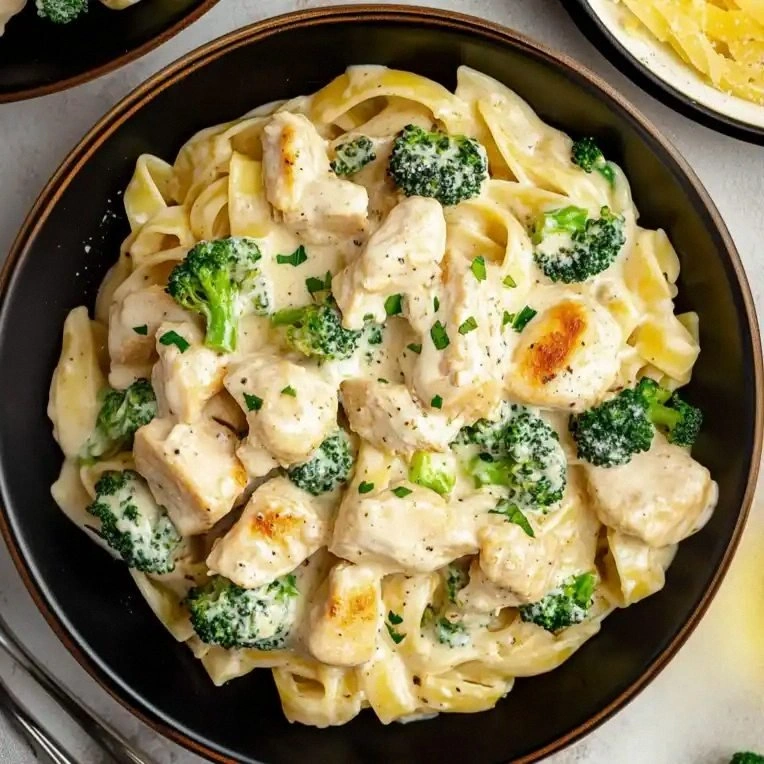
The Method — Step by Step
- Heat a large, heavy‑bottom skillet over medium‑high heat and add the olive oil. Once the oil shimmers, lay the chicken pieces flat in the pan. Sear them for 3–4 minutes on each side until golden brown and slightly caramelized. The searing process locks in juices and creates a flavorful crust. Don’t crowd the pan; if necessary, cook in batches to maintain the heat.
- Remove the chicken and set aside. In the same pan, add a splash of chicken broth to deglaze, scraping up any browned bits. The fond is where a lot of flavor lives, so give it a good stir. This step ensures that no tasty bits are wasted.
- Return the chicken to the skillet, add the broccoli florets, and pour in the Alfredo sauce. Stir everything together so the broccoli is coated and the sauce is evenly distributed. Let the mixture simmer for 5 minutes, allowing the broccoli to soften slightly while the chicken heats through. The sauce should thicken a bit, creating a luscious base.
- Add the pasta to the skillet, breaking it in half if necessary so it sits flat against the bottom. Stir to combine, ensuring the pasta is submerged in the sauce. Cook uncovered for 8–10 minutes, stirring occasionally, until the pasta is al dente. The sauce will reduce slightly, thickening further.
- At this point, the dish is almost finished, but watch out! The next step is crucial: add the heavy cream and stir. The cream should be added slowly to avoid curdling. This step creates a light, airy lift that makes the sauce feel like a cloud. Keep the heat low and let the mixture simmer for another 2–3 minutes.
- Season the sauce with salt and pepper to taste. The final touch is to sprinkle the grated Parmesan over the top, allowing it to melt into a golden crust. If you have a broiler, set the oven to broil and place the skillet on the top rack for 2–3 minutes, watching closely to avoid burning.
- Once the top is golden and the pasta is tender, remove the skillet from heat. Let it rest for 2 minutes; this allows the sauce to thicken further and the flavors to meld. Garnish with fresh parsley and an extra sprinkle of Parmesan before serving. Serve immediately for the best texture.
Insider Tricks for Flawless Results
The Temperature Rule Nobody Follows
Many cooks think simmering at low heat is enough, but the secret is to maintain a gentle, rolling boil during the pasta stage. This keeps the noodles from sticking and ensures the sauce coats each strand evenly. If you notice the sauce drying out, add a splash of broth or a little water to keep it glossy.
Why Your Nose Knows Best
Before you taste the sauce, give it a quick sniff. A faint buttery scent with a hint of garlic indicates that the flavors have melded. If the aroma feels flat, let it cook a bit longer or add a pinch more salt to awaken the profile.
The 5‑Minute Rest That Changes Everything
After removing the skillet from heat, let the dish sit for 5 minutes. This brief rest allows the sauce to thicken slightly and the flavors to settle. It also gives the pasta a chance to absorb the last drops of sauce, ensuring every bite is packed with flavor.
Broiling for the Perfect Crunch
If you’re aiming for a crisp top, broil for 30–45 seconds, not 2–3 minutes. Keep a close eye; the Parmesan can burn quickly. Once the top is a beautiful golden brown, remove it immediately to avoid over‑browning.
Using Fresh Broccoli vs. Frozen
Fresh broccoli retains its bright color and offers a crisp bite. Frozen broccoli, while convenient, tends to release more water, which can dilute the sauce. If you use frozen, blanch it first to reduce excess moisture.
Creative Twists and Variations
This recipe is a playground. Here are some of my favorite ways to switch things up:
Spinach & Sun‑Dried Tomato Version
Swap broccoli for a handful of fresh spinach and add chopped sun‑dried tomatoes for a sweet‑savory burst. The spinach wilts quickly, adding a green pop of color, while the tomatoes introduce a caramelized depth that pairs beautifully with the creamy sauce.
Mushroom & Truffle Oil Twist
Add sliced cremini mushrooms to the skillet, sautéing until they release their earthy juices. Finish with a drizzle of truffle oil after broiling; the aroma will elevate the dish to a gourmet level without extra cooking time.
Pesto & Pine Nut Variation
Stir in a couple of tablespoons of basil pesto after the pasta is cooked. Sprinkle toasted pine nuts on top before serving for a crunchy contrast. The pesto adds a fresh, herby brightness that cuts through the richness.
Spicy Kick with Red Pepper Flakes
Add a teaspoon of red pepper flakes when you add the chicken. The heat will linger in the sauce, giving a subtle warmth that pairs well with the creamy base. A squeeze of fresh lime juice at the end will brighten the dish.
Vegetarian Upgrade with Tofu
Replace the chicken with cubed silken tofu, lightly seared until golden. The tofu absorbs the sauce’s flavors while providing a protein boost. Add extra broccoli or any other vegetable you like for a wholesome, plant‑based meal.
Cheesy Bake Finish
Instead of broiling, transfer the skillet to a pre‑heated oven at 375°F and bake for 10 minutes. The heat will meld the cheese into a bubbly, golden crust, creating a comforting, casserole‑style finish.
Storing and Bringing It Back to Life
Fridge Storage
Let the dish cool to room temperature, then transfer it to an airtight container. Store in the refrigerator for up to 3 days. The sauce may thicken slightly; just reheat on the stove with a splash of milk or broth to restore its silky texture.
Freezer Friendly
For longer storage, portion the dish into freezer‑safe containers and freeze for up to 2 months. Thaw overnight in the refrigerator, then reheat gently on the stove, adding a little broth or milk to loosen the sauce. Avoid microwaving directly; it can break down the creamy consistency.
Best Reheating Method
Reheat over low heat, stirring frequently. A splash of water or milk helps maintain moisture and prevents the sauce from drying out. When the dish is heated through, finish with a fresh sprinkle of parsley and a dusting of Parmesan for a fresh finish.