I still remember the first time I attempted jambalaya in my cramped college apartment kitchen. The smoke alarm sang its shrill aria, my roommate waved a towel like a deranged orchestra conductor, and I stood there with a wooden spoon, wondering how something that started with such promise could smell like burnt regret. Fast forward ten years, and I've cracked the code to what might be the most soul-satisfying one-pot wonder to ever grace a Louisiana table. This isn't just another jambalaya recipe — this is the jambalaya that made my Cajun neighbor weep into his beer and declare I'd "finally understood the meaning of life."
Picture this: it's Sunday afternoon, the Saints game is on low volume, and you've got a cast iron pot bubbling away with what can only be described as edible jazz. The aroma weaves through your house like a lazy river, carrying hints of smoked paprika, sweet bell peppers, and that holy trinity of onion, celery, and bell pepper that's been dancing together since the dawn of Creole cooking. Your neighbors will knock. Your family will hover. And you'll feel like some kind of culinary wizard when you lift that lid and reveal a sunset-colored masterpiece that's been quietly transforming simple ingredients into pure magic.
What makes this version different? I spent three years testing, tweaking, and yes, occasionally setting off smoke detectors to discover the secrets that most recipes gloss over. We're talking about the exact moment to add your tomatoes so they don't turn mushy, the rice-to-liquid ratio that prevents that dreaded bottom-of-the-pan crust (unless you want it, which we'll cover), and the spice blend that'll make your taste buds do a second line parade. This is hands down the best version you'll ever make at home, and I dare you to taste this and not go back for thirds.
Okay, ready for the game-changer? We're using a technique I learned from a 75-year-old grandmother in Baton Rouge who swore me to secrecy (sorry, Miss Mae, but the world needs to know). It involves toasting your rice in the rendered fat from the sausage until each grain gets coated in flavor-packed gold. Stay with me here — this is worth it. Let me walk you through every single step — by the end, you'll wonder how you ever made it any other way.
What Makes This Version Stand Out
Smoke-Kissed Perfection: We start by rendering andouille sausage until the edges caramelize into meat candy, creating a flavor base that boxed mixes can only dream about. Those crispy bits that stick to the pot? That's liquid gold that'll infuse every grain of rice with smoky, porky excellence.
The Rice Revelation: Most recipes dump everything in and hope for the best. We toast our rice in that rendered fat until it turns opaque and nutty, creating a barrier that prevents mushiness and adds a depth that'll make rice purists weep with joy.
Spice Harmony: This isn't about blowing your head off with heat — it's about layers. Sweet paprika meets smoky, thyme dances with oregano, and just enough cayenne whispers rather than shouts. The result? Complex warmth that builds rather than destroys.
One-Pot Wonder: Despite tasting like you spent all day hovering over the stove, this beauty comes together in under an hour with minimal cleanup. Everything builds in one heavy pot, developing flavors that taste like they've been simmering since dawn.
Crowd-Pleasing Magic: I've served this to picky toddlers, spice-sensitive grandparents, and everything in between. The beauty lies in customization — set out hot sauce for the heat seekers, extra vegetables for the health-conscious, and watch everyone build their perfect bowl.
Make-Ahead Champion: This jambalaya actually improves overnight as the flavors marry and deepen. Make a double batch on Sunday, and you've got lunches that'll make coworkers jealous all week. Pro tip: it freezes beautifully in portion-sized containers.
Authentic Without the Airfare: You don't need to book a flight to New Orleans to experience real-deal flavor. This recipe captures the essence of Louisiana cooking using ingredients from any well-stocked grocery store. No specialty shops required, though a bottle of Crystal hot sauce wouldn't hurt.
Alright, let's break down exactly what goes into this masterpiece...
Inside the Ingredient List
The Flavor Foundation
Andouille sausage isn't just meat — it's the backbone of authentic jambalaya. This smoked pork sausage brings a peppery kick and smoky depth that regular Italian sausage can't touch. When the fat renders out, it creates the cooking medium for everything else, infusing each ingredient with Cajun soul. Skip it and you'll wonder why your jambalaya tastes like fancy rice pilaf instead of a Louisiana party. Look for sausage that's firm and deeply smoked, with visible pepper flakes throughout.
The holy trinity — onion, celery, and bell pepper — isn't just a cute name. These three vegetables form the aromatic base of nearly every Louisiana dish, creating a flavor profile that's instantly recognizable. Dice them small and even so they cook at the same rate, releasing their juices to create the flavor foundation. Yellow onion brings sweetness, celery adds grassy notes, and green bell pepper contributes that distinctive Louisiana earthiness.
The Protein Powerhouse
Chicken thighs beat breasts every time here, staying juicy even after aggressive simmering. Cut them into bite-sized pieces that'll cook quickly and evenly, absorbing all those spice flavors. Dark meat contains more connective tissue that breaks down into gelatin, adding body to the final dish. If you must use breast meat, reduce cooking time by five minutes to prevent stringy, dry chicken.
Shrimp adds luxury and that unmistakable Gulf Coast flavor, but timing is everything. Add them too early and they'll turn into rubbery pink commas that no amount of hot sauce can save. Wait until the rice is nearly done, then nestle them in for just three to four minutes. They'll finish cooking in the residual heat, staying plump and tender.
The Rice Revelation
Long-grain rice is non-negotiable — its lower starch content keeps grains separate and fluffy rather than gummy. Jasmine or basmati work in a pinch, but avoid short-grain or medium-grain varieties that'll turn your jambalaya into risotto. Rinse the rice until the water runs clear to remove excess starch that could make things mushy. This simple step transforms your final texture from cafeteria-style to restaurant-quality.
The Spice Symphony
Smoked paprika isn't just regular paprika's cooler cousin — it's the secret to that deep, complex flavor that makes people ask "what's in this?" Sweet paprika adds color but little flavor, while smoked paprika brings a campfire quality that makes the whole dish taste like it cooked over wood. Combine it with thyme, oregano, and a bay leaf for that authentic Louisiana herb profile.
Cayenne provides the heat, but control is key. Start with half a teaspoon for gentle warmth, or go up to a full teaspoon if you want that authentic Louisiana burn. Remember, you can always add hot sauce at the table, but you can't take the heat out once it's in. The heat should build slowly, making you reach for your drink but not calling the fire department.
Everything's prepped? Good. Let's get into the real action...
The Method — Step by Step
- Render the sausage gold: Heat a heavy-bottomed pot or Dutch oven over medium heat and add your sliced andouille sausage in a single layer. Don't crowd the pan — work in batches if needed. Let it sit undisturbed for three minutes until the bottoms caramelize into a deep mahogany. That sizzle when it hits the pan? Absolute perfection. Stir occasionally until the edges turn crispy and the fat renders out, creating a shimmering pool of flavor that'll make everything else taste like Louisiana sunshine.
- Build the aromatic base: Remove the sausage with a slotted spoon, leaving behind those precious fat deposits. Add your diced onion, celery, and bell pepper to the pot, stirring to coat each piece in that smoky pork fat. Cook for five to six minutes until the vegetables soften and the onion turns translucent. The kitchen will start smelling like Mardi Gras — embrace it. Add garlic and cook for another minute until fragrant but not browned.
- Create the spice paste: Push the vegetables to one side and add your tomato paste, letting it caramelize for two minutes until it turns from bright red to a deeper brick color. This step concentrates the tomato flavor and removes any tinny taste. Stir in your smoked paprika, thyme, oregano, cayenne, and bay leaf, cooking for thirty seconds until the spices bloom and become intensely aromatic. Your kitchen will smell like you've been transported to a New Orleans kitchen.
- Bloom the rice: Add your rinsed long-grain rice to the pot, stirring to coat each grain in the spice mixture and rendered fat. This is the moment of truth — toast the rice for three to four minutes until it turns opaque and slightly nutty. This creates a protective barrier that prevents the rice from becoming mushy and adds a depth of flavor that'll make you wonder why you've been skipping this step your whole life. Don't walk away from the stove here — stir frequently to prevent burning.
- Deglaze and combine: Pour in your diced tomatoes with their juice, chicken stock, and Worcestershire sauce, scraping up all those beautiful browned bits from the bottom. Return the sausage to the pot along with your diced chicken thighs. Bring everything to a boil, then reduce to a gentle simmer. The liquid should just cover the rice — add a splash more stock if needed. This next part? Pure magic.
- Simmer and steam: Cover the pot tightly and reduce heat to low. Let it simmer undisturbed for 20 minutes — resist the urge to peek! The steam trapped inside is doing the work, cooking the rice and infusing everything with flavor. Set a timer and walk away. If you've been struggling with mushy rice, you're not alone — and I've got the fix. The key is maintaining that gentle simmer without lifting the lid.
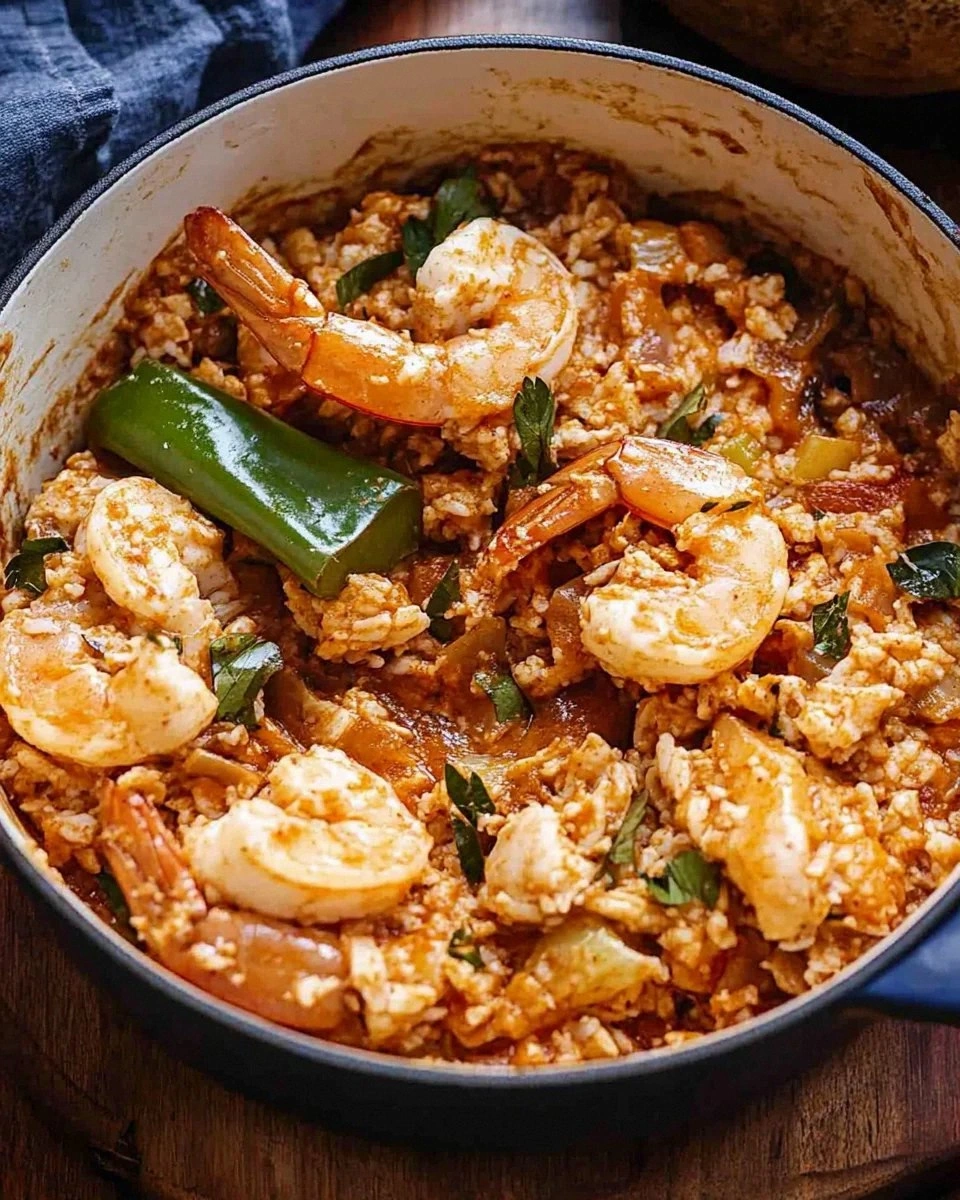
- Add the seafood finale: After 20 minutes, quickly lift the lid and scatter your peeled shrimp over the surface. Replace the lid immediately and cook for three to four minutes more. The shrimp will turn pink and curl into perfect C-shapes — if they form tight O's, they're overcooked. Turn off the heat and let it rest for five minutes. The residual heat will finish cooking the shrimp while the rice absorbs any remaining liquid.
- Fluff and serve: Remove the bay leaf, add a splash of hot sauce if desired, and fluff everything gently with a fork. The rice should be tender but not mushy, each grain distinct and coated in that beautiful reddish-orange hue. Taste and adjust seasoning — you might want more salt or a dash more hot sauce. Picture yourself pulling this out of the oven, the whole kitchen smelling incredible, and get ready for the applause.
That's it — you did it. But hold on, I've got a few more tricks that'll take this to another level...
Insider Tricks for Flawless Results
The Temperature Rule Nobody Follows
Here's what separates good jambalaya from great jambalaya: maintaining the perfect simmer. Too hot and your rice turns to mush with a burnt bottom. Too cool and you'll be eating crunchy rice for dinner. The liquid should bubble gently, like a lazy Louisiana bayou, not like a jacuzzi on steroids. I'll be honest — I ate half the batch before anyone else got to try it while perfecting this technique. Use the smallest burner on your stove, or better yet, invest in a flame tamer to distribute heat evenly.
Why Your Nose Knows Best
Don't underestimate the power of aroma in cooking. When your jambalaya is nearly done, it should smell like a Louisiana kitchen on Sunday afternoon. If you smell raw onion or undercooked spices, give it another few minutes. If you smell burning, you've gone too far — reduce heat immediately and add a splash of stock. A friend tried skipping this sensory check once — let's just say it didn't end well. Trust your nose; it's been evolving for millions of years to detect exactly these kinds of cooking cues.
The 5-Minute Rest That Changes Everything
And now the fun part — the final rest. After cooking, let your jambalaya sit covered for five minutes off heat. This isn't just about being too hot to eat (though it will be). During this rest, the rice finishes absorbing liquid, the shrimp set perfectly, and the flavors meld into something greater than the sum of their parts. Use this time to set the table, open a beer, and bask in the admiration of anyone lucky enough to share your table. Those five minutes transform good jambalaya into the kind that people talk about years later.
Creative Twists and Variations
This recipe is a playground. Here are some of my favorite ways to switch things up:
Creole Redemption
Swap the andouille for tasso ham and add a pound of crawfish tails in place of shrimp. The tasso brings a peppery, smoky flavor that's pure Louisiana luxury. Crawfish cook even faster than shrimp — just two minutes does it. This version screams Mardi Gras and pairs perfectly with an Abita beer and some zydeco music.
Bayou Breakfast
Add diced breakfast sausage and a can of red beans for a heartier version that'll stick to your ribs. The beans add creaminess and stretch the dish to feed a crowd. Most recipes get this completely wrong by adding the beans too early — wait until the last ten minutes so they stay intact rather than turning to mush.
Green Monster
For a vegetable-forward version, double the holy trinity and add diced zucchini, okra, and cherry tomatoes. The okra acts as a natural thickener, giving you that authentic Louisiana texture without any seafood. Even carnivores won't miss the meat when they taste how the vegetables caramelize and concentrate.
White Lightning
Skip the tomatoes entirely for a white jambalaya that's lighter but no less flavorful. Increase the chicken stock by half a cup and add a splash of white wine. The result is elegant enough for dinner parties but comforting enough for a Tuesday night.
Fire in the Bayou
Add a minced habanero along with the cayenne for serious heat seekers. Keep milk nearby — this version brings the pain but in the best possible way. The fruity habanero notes complement the sweet tomatoes and create a complex heat that builds rather than destroys.
Coastal Catch
Use a mix of shrimp, scallops, and lump crab meat for a seafood lover's dream. Add the scallops with the shrimp and fold in the crab meat at the very end so it stays in luxurious chunks. This is special occasion jambalaya — anniversary dinner territory.
Storing and Bringing It Back to Life
Fridge Storage
Let your jambalaya cool completely before transferring to airtight containers. It'll keep for up to four days in the refrigerator, though I doubt it'll last that long. Store the rice and proteins together — they've already married their flavors and separating them would be like asking for a divorce after the honeymoon. The flavors actually intensify overnight, making leftovers something to celebrate rather than endure.
Freezer Friendly
Portion cooled jambalaya into freezer bags, pressing out excess air before sealing. Lay flat to freeze — they'll stack like flavor pancakes and thaw quickly under running water. Frozen jambalaya keeps for three months, though after two months it starts to lose that fresh vibrancy. Label with the date and a warning: "Contains serious deliciousness. Thaw responsibly."
Best Reheating Method
Add a splash of water or stock to your jambalaya before reheating — it steams back to perfection. Microwave on medium power in 30-second bursts, stirring between each burst. For larger portions, reheat in a covered skillet over medium-low heat with a tablespoon of water. The gentle steam rehydrates the rice without turning it to mush. Whatever you do, avoid high heat — it'll turn your beautiful creation into a dry, sad shadow of its former glory.